
How to Verify Mānuka Honey Quality Before You Buy
Mānuka honey has a well-deserved reputation as one of the most potent natural wellness ingredients on the market. That reputation has also made it the target for imitation. For a wellness-focused consumer purchasing a product specifically for its health properties, knowing how to tell the difference is genuinely important.
The good news is that a clear, dependable framework for verifying Mānuka honey quality exists. You just need to know what to look for.
Why Authenticity Determines Whether The Honey Works
The wellness benefits associated with genuine Mānuka honey come from a specific set of compounds that are naturally present in honey made from the nectar of the New Zealand mānuka plant. The most significant of these is methylglyoxal, known as MGO, which is responsible for much of the honey's antibacterial activity.
Authentic Mānuka honey has been scientifically proven to support the healing of skin conditions, as well as soothe sore throats, support oral health, and enhance immune response. Honey with unverified or overstated claims may taste similar but deliver little of the benefits. Mānuka honey potency is a measurable, testable fact, and the only way to access it with confidence is through independent certification.
The UMF System: Where Verification Starts
The most important thing to look for on any jar of Mānuka honey is the UMF trademark, which stands for Unique Mānuka Factor. UMF is an independently certified quality system administered by the UMF Honey Association, and it is the most comprehensive standard available for verifying Mānuka honey quality, authenticity, purity, freshness, and shelf life in a single assessment.
A jar displaying the UMF trademark will also include a license number from the producer, confirming that the producer is an authorized participant in the certification program. Both the trademark and the license number need to be present.
The UMF rating on the label (most commonly UMF 5+, 10+, 15+, or 20+) reflects the scientifically tested levels of the key bioactive markers and allow the consumer to choose a strength that suits their specific wellness goals. A UMF 5+ or 10+ jar is suited to daily support and wellness boosting, while UMF 15+ and above offers a higher level of antibacterial and therapeutic activity. Jars labeled simply as "active" or carrying MGO numbers without UMF certification do not offer the same comprehensive independent verification, and their claims are often harder to substantiate.
Origin Matters As Much As Certification
Genuine UMF-certified Mānuka honey is required to be sourced, tested, packed, and labeled in New Zealand. This is not an optional part of the standard and is one of the reasons the system is trusted by consumers worldwide.
When buying Mānuka honey in the US, take a moment to read the label carefully for the country of origin. US labeling regulations require imported honey to clearly state its origin, so a genuine product will carry a clear declaration such as "Product of New Zealand". If the origin is vague, absent, or lists a country other than New Zealand, that is your signal to look elsewhere.
Cross-checking the UMF certification against a confirmed New Zealand origin gives you a reliable foundation for confidence in what you are buying.
The FernMark: An Extra Layer Of Assurance
The FernMark is a government-backed country-of-origin symbol administered by New Zealand Trade and Enterprise. When it appears on a jar of Mānuka honey, it signals that the product is 100% made from New Zealand-sourced honey and meets the high export standards required to carry the mark.
For a US consumer, the FernMark is a useful additional checkpoint. When it appears alongside UMF certification, the two together effectively rule out the possibility of blended or offshore-repacked products making it onto your shelf. Neither certification requires the other, but the combination of both provides a level of consumer assurance that neither offers on its own.
The Brand Behind The Honey
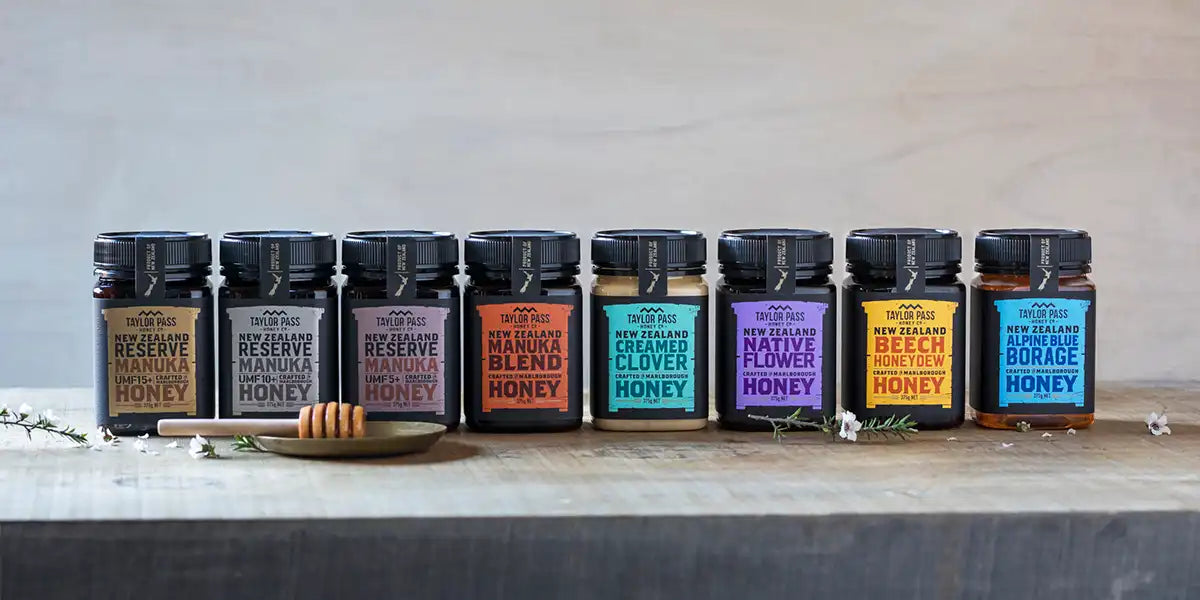
A company that operates with control along every step from hive to jar, removes the gaps where quality can slip or claims can be overstated. Taylor Pass Honey Co. is a fully vertically integrated New Zealand producer, which means complete oversight at every stage of production. That level of involvement is what makes authentication possible and what makes the certifications on each jar credible.
Taylor Pass Honey Co. is also a certified B Corporation, a status awarded by B Lab for meeting independently verified standards across governance, environmental performance, worker welfare, community impact, and customer accountability. For wellness-focused consumers who care about the ethics and sustainability of the brands they support, B Corp certification provides a further layer of assurance that goes beyond what any product-specific label can convey. It signals that the company behind the jar operates with the same standards it asks you to trust on the shelf.
What to Look for Every Time
Bringing this all together into a practical buying approach, the key markers of a genuinely high-quality Mānuka honey are consistent and straightforward to check. The UMF trademark and a license number from the producer are the non-negotiable starting point. A UMF rating that matches your wellness goals tells you the potency level has been independently tested. A clear New Zealand country of origin declaration on the label confirms the honey is from the only place in the world where genuine Mānuka honey can be produced. The FernMark, when present alongside UMF, adds a government-backed confirmation of provenance. And a reputable brand with verifiable ethical standards ensures that every other marker on the label is backed by a business genuinely committed to maintaining them.
Mānuka honey at its best is a remarkable wellness ingredient. Checking these markers before you buy ensures that what you are getting is actually that.
Find genuine Taylor Pass Honey Co. Manuka Honey at a store near you by clicking the link here. Or shop online here.