
Mānuka Honey vs. Regular Honey: The Difference
Most of us grew up with a plastic bear of honey sitting next to the peanut butter. It’s great on toast, soothes a scratchy throat, and sweetens tea delightfully. So when you spot a small jar of Mānuka honey at well above the price of regular honey, the obvious question is: why? And what’s the difference? The answer is quite a lot.
Where Regular Honey and Mānuka Honey Come From
Genuine regular honey is made by bees collecting nectar from whatever flowers are nearby. Clover, fruit tree blossoms, wildflowers, and more. That mix of sources is called multifloral, and it's why regular honey can be produced pretty much anywhere in the world. The US, Argentina, India, and dozens of other countries all produce it at scale, which is a big part of why it stays affordable.
Genuine Mānuka honey is different in one important way: the bees visit one plant. The Mānuka tree (Leptospermum scoparium), which grows wild in New Zealand, only flowers for two to six weeks each summer. That tight window is the first reason Mānuka honey is rare and more expensive.
What's Actually Inside Each Jar
All honey contains natural traces of hydrogen peroxide, which gives it a mild antibacterial quality. Regular honey works this way, too. It can have a real effect, but it's also relatively fragile. Heat and light can impact it significantly.
Mānuka honey contains something extra: concentrations of a compound called Methylglyoxal, or MGO. This MGO level is what sets Mānuka apart from other honeys on the market. Unlike hydrogen peroxide activity, MGO is stable. It holds up under conditions where regular honey's antibacterial properties would fade.
Where does MGO come from? The Mānuka flower's nectar is naturally rich in a precursor compound that is converted into MGO by the bees.
Two other compounds, including Leptosperin, are also found uniquely in genuine Mānuka honey. Scientists use the presence of these compounds to verify authenticity.
What People Use Mānuka Honey For
This is the question most shoppers ask: Does Mānuka honey do anything that regular honey doesn't?
For regular honey, the wellness case is modest but real. It's a natural source of antioxidants, it can take the edge off a sore throat, and it has a long history of use as a general-purpose way to sweeten a tonic.
With Mānuka, the range of reasons people reach for it is wider, and the research base behind those reasons is more developed. A few areas that come up consistently:
Throat and mouth comfort: This is probably the most common use. Mānuka's thicker texture and stronger antibacterial profile make it a popular choice when a sore throat strikes. Some dentists and oral health researchers have also looked into its effects on the bacteria that cause plaque and gum issues.
Skin and wound care: Medical-grade Mānuka honey products are already in use on wounds in some countries, and this is one of the more rigorously studied areas. The stability of MGO under moist conditions, like the kind of environment a wound presents, is a key reason researchers have pursued this direction.
Digestive comfort: There's growing interest in how Mānuka interacts with gut bacteria, including bacteria associated with stomach ulcers. Research is still in progress, and it isn't a substitute for medical advice, but this is an area where the science is actively moving.
General daily wellness: Many people simply take a teaspoon of high-grade Mānuka each morning as part of a broader wellness routine, in the same way others might reach for a supplement.
It is worth noting that the information here should not be taken as specific medical advice. Individual needs may vary, and for health concerns, you should consult your medical professional. The wellness associations of Mānuka honey aren't just marketing; there's genuine science behind the story.
What Mānuka honey Tastes and Feels Like
It may surprise some people to learn that honey can have a diverse range of flavor nuances.
Regular honey is light, clear, and straightforwardly sweet. It pours easily and has a familiar taste that varies slightly depending on which flowers the bees visited.
Mānuka is thicker and creamier, with a deep golden, almost opaque color. The sweetness is more sophisticated, the taste is richer, and moves from toffee notes to distinctive herbal tones as the MGO levels increase.
The Mānuka honey Grading System
Here's something that catches many shoppers off guard: there's no standardized grading system for regular honey. Labels like "raw," or "natural" aren't tightly regulated, so they don't tell you much about potency.
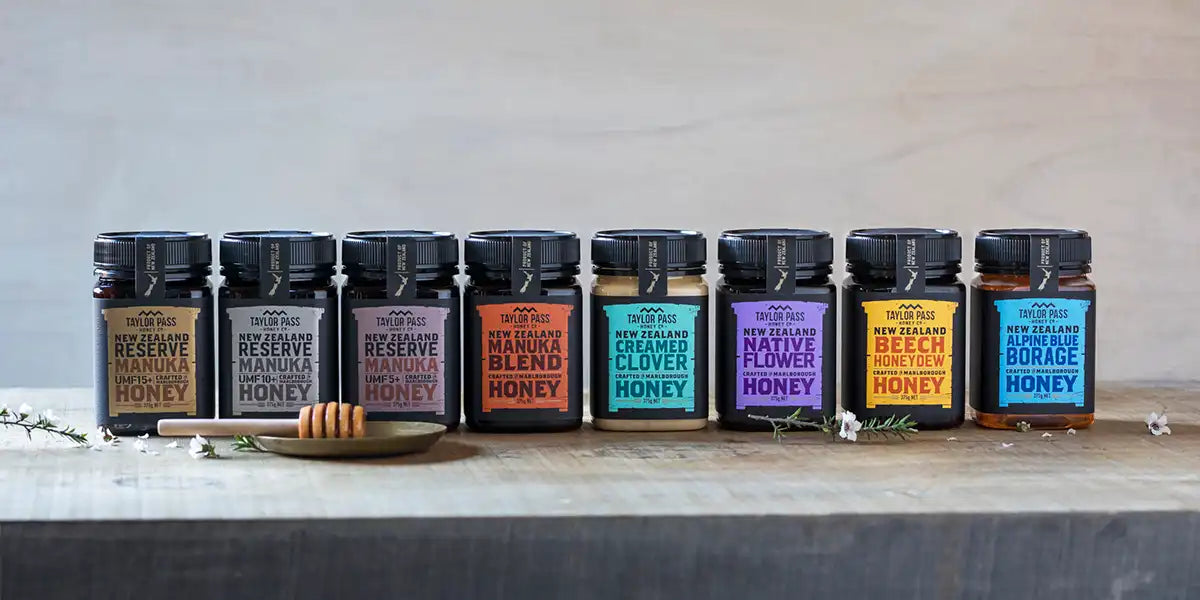
Mānuka honey has a real certification system. The most widely trusted is the UMF™ (Unique Mānuka Factor) rating, which is licensed and independently tested. A UMF™ 5+ is an entry-level grade. UMF™ 15+ and above is considered high potency. The number directly reflects the concentration of MGO and the presence of authenticating compounds, such as Leptosperin.
MGO ratings work similarly; a jar labeled MGO 514+ has at least 514 milligrams per kilogram (mg/kg) of methylglyoxal.
If a jar doesn't carry a UMF™ certification mark or a verified MGO rating, treat it with skepticism. Genuine Mānuka is traceable, tested, and certified. If those markers aren't on the label, you may not be getting what you're paying for.
What Are You Actually Buying?
Here's the simplest way to think about it.
Regular honey is an everyday natural sweetener with benefits over refined sugar or processed food sweeteners.
Mānuka honey is something more specific. Its remarkable natural compounds put it in a different category. People who use it are typically drawn to its unique qualities, whether for general wellness or more targeted purposes. The UMF™ grading system means that when you buy a certified jar, you know exactly what you're getting.
That's what the premium reflects: rarity, sophisticated flavor, rigorous testing, and natural beneficial properties that no other honey on earth can match.
Remember: when you shop for Mānuka honey, look for the UMF™ certification mark on the label and buy from reputable retailers. The higher the UMF™ or MGO number, the more concentrated the active compounds.