
What Is Mānuka Honey Good For?
New Zealand Mānuka honey is highly regarded for soothing sore throats and coughs. In medical-grade form, used under clinical guidance, it is used to help manage certain wounds and burns. It's also traditionally used to support skin, oral care, and general wellbeing, and scientific evidence for these and other uses is still developing.
What Is Mānuka Honey?
Mānuka honey is a monofloral honey produced by bees that forage on the nectar of the mānuka tree (Leptospermum scoparium), native to New Zealand. What sets it apart from many other honeys is its concentration of naturally occurring bioactive compounds, most notably methylglyoxal (MGO) and leptosperin, which are used as markers of its distinctive properties.
Mānuka honey exported from New Zealand must meet government-regulated standards, including New Zealand’s official mānuka-honey definition. Some producers also use the voluntary Unique Mānuka Factor Honey Association (UMFHA) UMF™ quality-assurance system, which independently tests and verifies quality factors including potency, authenticity, freshness and shelf life.
What Is Mānuka Honey Good For? A Quick-reference List
Mānuka honey has a range of practical uses. Here is a quick view of some of the most popular:
- Soothing sore throats and coughs; traditionally taken by the spoonful or stirred into warm drinks
- Wound care and burn care; using medical-grade Mānuka honey products
- Oral health; as a complement to (not a replacement for) regular dental care
- Skin care; applied topically to soothe minor irritations and to moisturize
- General wellbeing; enjoyed as a functional food containing antioxidant compounds
- A natural sweetener; used in place of refined sugar in drinks, on toast, or in recipes
Each of these is explored in more detail below.
Is Mānuka Honey Good For a Sore Throat?
Yes, this is one of its most widely recognized traditional uses. A teaspoon of Mānuka honey, taken straight or stirred into warm water with lemon, can help coat and soothe an irritated throat and may ease the discomfort of a cough. This effect parallels other types of honey, which have been used for generations as a natural throat remedy.
How to use it: A teaspoon of Mānuka honey, a few times a day as needed. Many people find warm (not hot) water helps distribute the honey more comfortably. Adding mānuka honey to boiling or very hot water can reduce some of its heat-sensitive properties, particularly enzymes and active compounds.
Important: Honey, including Mānuka honey, shouldn’t be given to children under 1 year of age. If a sore throat is severe, lasts more than a few days, or is accompanied by high fever, see a healthcare professional.
Does Mānuka Honey Help Wounds Heal?
Sterile medical-grade Mānuka honey products are used by healthcare professionals as part of wound and burn management. However, there's a crucial distinction: regular honey is not the same as medical-grade honey. Food-grade Mānuka honey should never be applied to open wounds. Only products specifically manufactured and labeled for wound care should be used on the skin in that way, and Mānuka honey is not a substitute for professional wound assessment.
Is Mānuka Honey Good For Gut Health?
Mānuka honey is often described as a functional food that may also support digestive wellness, and early research is exploring how its natural compounds interact with the gut.
That said, the evidence in this area is still developing. Mānuka honey isn't a treatment for diagnosed digestive conditions, and anyone experiencing ongoing digestive symptoms should speak with a doctor rather than self-treating.
How people typically use it: A teaspoon on its own, stirred into warm water, or added to yogurt or oats as part of a normal diet.

Does Mānuka Honey Help Skin And Acne?
Topical Mānuka honey is a popular addition to natural skin care regimens. It has a thick, moisture-retaining texture, and early studies suggest its natural compounds may help calm minor skin irritation. It's often used in DIY face masks or dabbed onto small blemishes.
A few useful tips:
- Always patch-test on a small area first, especially if you have sensitive skin or any allergy history
- Use clean hands or a clean applicator
- For persistent acne, eczema, or other skin conditions, consult a dermatologist. Mānuka honey may be a welcome addition to a routine, but it isn't a medical treatment
Avoid applying honey to broken skin or open lesions unless you're using a sterile medical-grade product.
What Does The UMF And MGO Rating Mean?
If you've shopped for Mānuka honey, you've probably seen jars marked with numbers like "UMF 10+" or "MGO 263+". Here's what those actually mean:
- UMF™ (Unique Mānuka Factor) is a certification system run by the UMFHA in New Zealand. It verifies four things: potency (the levels of key markers including MGO and leptosperin), authenticity (that it's genuine Mānuka), freshness, and shelf life.
- MGO (methylglyoxal) is a naturally naturally existing compound in Mānuka honey. The MGO number tells you the concentration in milligrams per kilogram.
A higher UMF or MGO rating indicates a higher concentration of these markers, but it's important to understand what that does and doesn't mean. A rating is not a medical dosage, and it doesn't guarantee any particular health outcome. Higher-grade honey isn't automatically "better" for everyday use; for many people, a mid-range grade is perfectly suitable for daily enjoyment, with higher grades chosen for more specific uses.
For the full explanation of the UMF grading system, visit the UMFHA website.
How To Use Mānuka Honey Daily
Mānuka honey is easy to fit into everyday life. Here are a few simple ideas:
- A spoonful straight from the jar; the traditional way to enjoy it
- Stirred into warm (not boiling) water with lemon; a soothing drink, especially in cooler months
- Drizzled over your oats, yogurt, or fresh fruit; a simple, delicious way to add wellness support to your morning
- Spread on toast; as a natural alternative to jam or refined sugar-based spreads
- Added to smoothies; for a wellness-boosting touch of natural sweetness
- As a sugar substitute in recipes; works well in dressings, marinades, and baked goods, though high heat may reduce some of its natural bioactive compounds
A teaspoon of Mānuka honey a day is a reasonable amount for most of us to enjoy. Remember it's still a form of sugar, so factor that into your overall diet.
Mānuka honey has earned its place as one of New Zealand's most distinctive natural products. Used as part of a wellness or skincare routine, or a natural sweetener, it's a welcome ingredient to have on hand. For anything more serious, it's a companion to good medical care, never a substitute for it.
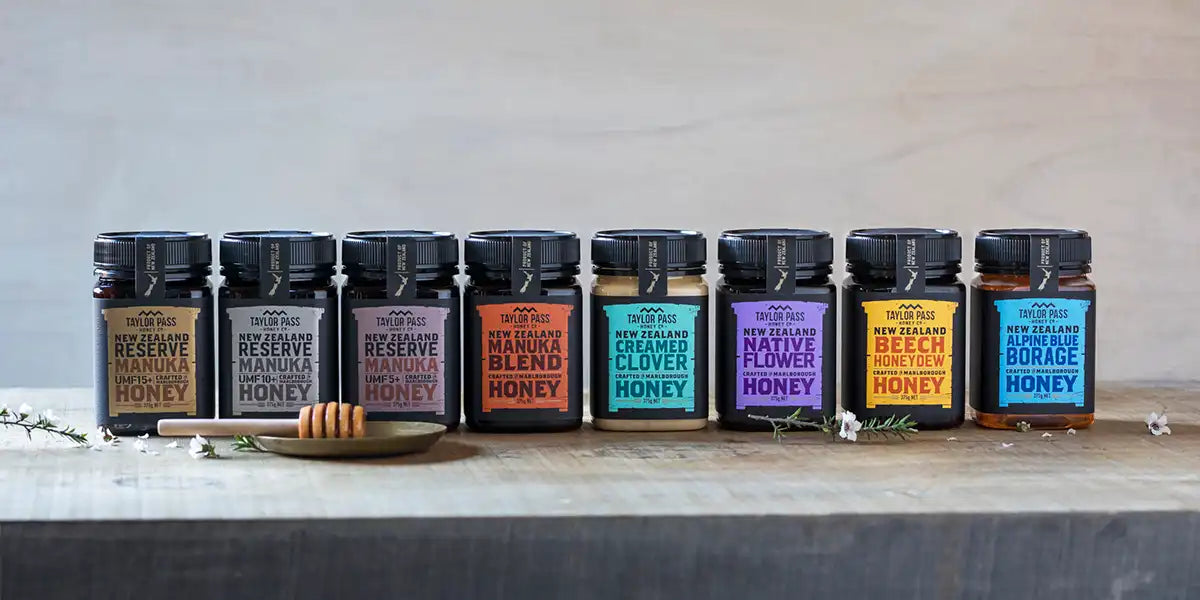
Find Taylor Pass UMF™-certified Mānuka honey at stores near you, or shop online now.