
Why Does New Zealand Origin Matter for Mānuka Honey?
For people who value its genuine benefits, having a New Zealand origin matters for Mānuka honey because in New Zealand, Mānuka honey is legally defined, scientifically tested, and tightly regulated.
Honey that is exported from New Zealand as Mānuka must meet a science-based definition set by the Ministry for Primary Industries (MPI). When that honey is also packed in New Zealand, it keeps a chain of custody from the hive to the jar you buy.
Mānuka honey can cost considerably more than regular honey. The premium price makes more sense when the honey inside the jar is what the label says it is. Knowing where your honey was produced, tested, and packed is the most reliable way to judge that before you pay.

What makes New Zealand the home of Mānuka honey?
Mānuka honey comes from bees that feed on the flowers of the Mānuka shrub (Leptospermum scoparium). The plant grows across New Zealand, from coastal scrub to hill country and remote backcountry. Its name comes from te reo Māori, New Zealand's Indigenous language.
The Mānuka tree flowers for only a few weeks each year, usually in late spring and early summer. A short season and remote or challenging terrain keep supply limited.
How does New Zealand law define Mānuka honey?
New Zealand defines Mānuka honey by laboratory science, not by marketing. The Ministry for Primary Industries introduced its Mānuka honey science definition in 2017, and it has applied to exports since early 2018. Any honey exported from New Zealand as Mānuka must pass it.
The test checks five attributes:
- 3-phenyllactic acid (3-PLA), a naturally occurring chemical from Mānuka nectar
- 2'-methoxyacetophenone (2'-MAP), a naturally occurring chemical from Mānuka nectar
- 2-methoxybenzoic acid (2-MBA), a naturally occurring chemical from Mānuka nectar
- 4-hydroxyphenyllactic acid (4-HPLA), a naturally occurring chemical from Mānuka nectar
- Mānuka pollen DNA, a genetic marker that confirms the plant source
Based on the results, honey is classed as either monofloral Mānuka (mostly from Mānuka flowers) or multifloral Mānuka (a blend with other flowers). Honey that fails cannot be exported under the Mānuka name.
The testing must be done by a laboratory recognized by MPI.
Before this definition existed, there was no agreed standard for what counted as Mānuka honey. Producers in different places used different tests, and some used none. The definition gave buyers a consistent benchmark for the first time.
The definition applies at the point of export, so it tells you what left New Zealand. It cannot account for anything that happens to the honey after it leaves the country.
Why does it matter where Mānuka honey is packed?
Packing location matters because it can affect how clearly the honey in your jar can be linked to its testing and supply-chain records.
New Zealand mānuka honey exported from New Zealand must meet MPI’s scientific definition, which uses four chemical markers and a mānuka-pollen DNA marker. If honey is exported in bulk and later blended, repacked or relabelled overseas, the first export test may no longer fully describe the product in the final jar.
For greater confidence, look for clear New Zealand origin information and the leading trusted independent certification mark: UMF™ (Unique Mānuka Factor).
How can you check whether your Mānuka honey is from New Zealand?
Start by checking that the label states ‘Product of New Zealand’. Claims such as “New Zealand brand” or “made with New Zealand honey” do not necessarily confirm the origin of the specific product.
For additional assurance, look for a genuine UMF™ mark, and a four-digit licence number. You can check the license holder through the UMFHA certification search. Be cautious if a product prominently uses the word “mānuka” but gives little information about origin or certification. A premium price does not prove authenticity. If a product uses the word "Mānuka" prominently but is packed outside New Zealand and shows no UMF or MPI-backed testing, treat the claim with caution. This is especially true at premium prices.
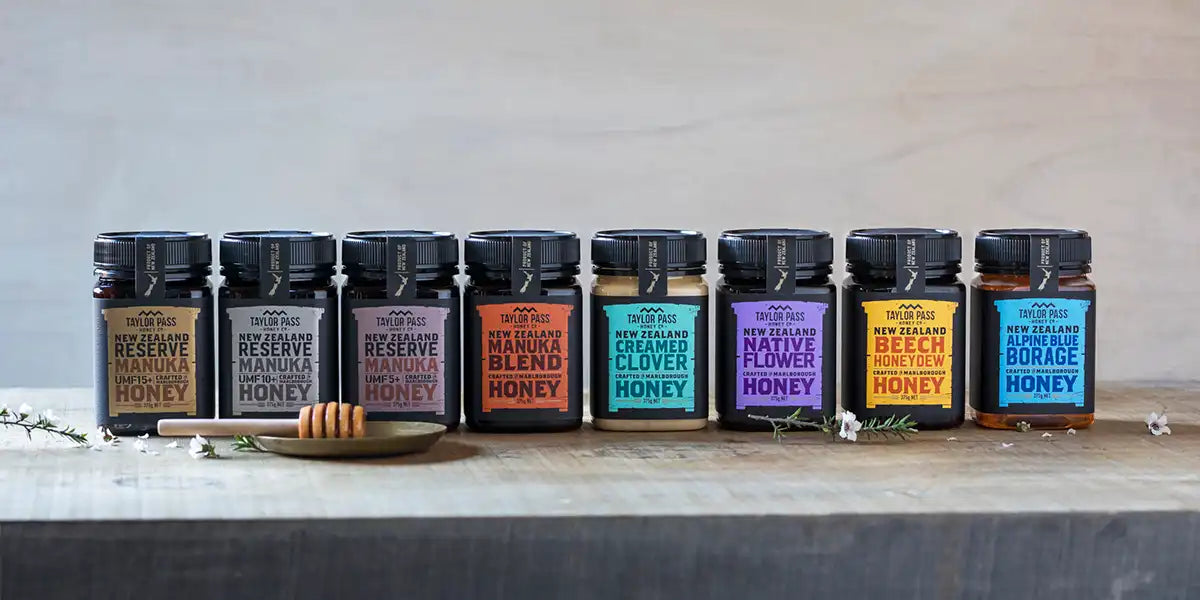
Find genuine, UMF™ certified New Zealand honey at a quality grocer near you, or shop online here.