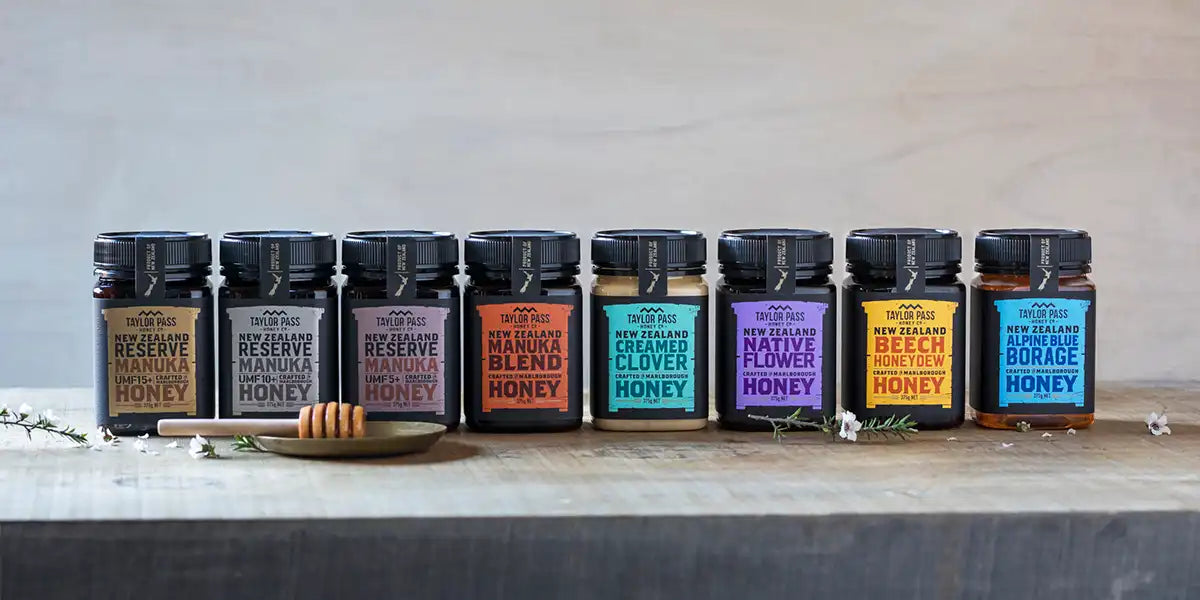

Why Mānuka Honey Antibacterial Properties Matter for You
Curious about Mānuka honey's antibacterial strength? Mānuka honey offers more than other natural honeys. It is a specific type of honey with specific markers of antibacterial power. Find out how this remarkable honey supports health and nourishment completely naturally.
What Is Mānuka Honey?
Mānuka honey comes from bees that collect nectar from the Mānuka plant that grows wild in specific regions of New Zealand. The nectar from this plant gives the honey a thicker texture, a darker color, and a bold, slightly medicinal flavor with a balanced sweetness that adds to its desirability among food lovers. What makes Mānuka stand out for wellness fans is its measurable antibacterial activity. This is where ratings like UMF™ and MGO are helpful.
UMF™: The Quality Grade and Assurance
UMF™ stands for Unique Mānuka Factor. It is an independent quality grading system that assesses Mānuka honey for purity, potency, and genuineness. A higher UMF™ rating indicates higher, more reliable antibacterial activity. Look for a UMF™ rating on the label if you want Mānuka for wellness support, not just flavor.
MGO: The Antibacterial Marker
MGO stands for methylglyoxal, the key antibacterial compound in Mānuka honey. The number you see next to MGO on a jar tells you how much of this compound is present. A higher MGO number generally means stronger antibacterial strength. Quick guide: UMF is the trusted quality grade, MGO is the main antibacterial marker. Both belong on the label of a serious Mānuka honey.
Understanding Mānuka Honey's Antibacterial Properties
Mānuka honey fights bacteria in a few different ways at the same time, which is why it is so highly regarded compared with everyday honey.
The Key Antibacterial Element: MGO
Methylglyoxal (MGO) is the main antibacterial compound in Mānuka honey. It interferes with bacteria, making it harder for them to grow and spread. The more MGO in the honey, the stronger this direct antibacterial effect tends to be.
The Supporting Factors
Mānuka honey’s antibacterial activity comes from a combination of factors. Its low water content makes it difficult for many bacteria to thrive. The natural acidity creates an environment that resists the growth of harmful microbes. Manuka honey has a thickness that helps form a protective coating on the skin or throat. These overlapping actions help explain why Mānuka honey can support skin healing and calm irritations. It protects the area, keeps it moist in a controlled way, and makes it harder for unwanted bacteria to survive. Because Mānuka honey works through several natural pathways simultaneously, bacteria are less likely to adapt to it than with a single-ingredient product.
Manuka Honey’s Health and Wellness Benefits
Mānuka honey is gaining appeal to wellness seekers and food lovers alike because it pairs rich, sophisticated flavor with natural antibacterial support that fits easily into daily life.
Skin and Wound Comfort
Mānuka honey, when used on clean skin for minor skin issues, can help create a protective layer. Its thickness and natural antibacterial properties can support the skin's own repair process and help keep the area more comfortable.
Soothing Sore Throats
A spoonful of Mānuka honey can coat a scratchy throat and soothe that raw feeling. The natural sweetness encourages saliva secretion, and the antibacterial properties support a cleaner environment in the mouth and upper throat.
Oral Health Support
Used in small amounts, Mānuka honey can fit into your oral care routine. Its antibacterial activity can help limit unwanted mouth bacteria (its antibacterial action can actually work against cavity-causing bacteria), while its texture and flavor make it easy to use.
Digestive Wellness
Many people enjoy Mānuka honey as a gentle daily support for digestion. A small serving in warm water, or tea, or on yogurt or toast can provide soothing comfort while its natural antibacterial action helps support a balanced gut environment.
How to Use Mānuka Honey Safely and Effectively
Daily Wellness Serving
To support your natural wellness, use about a teaspoon of Mānuka honey per day. You can enjoy it straight from the spoon, or stir it into warm (not boiling) tea, or swirl it into yogurt or oatmeal. Very high UMF™ or MGO ratings are usually best saved for more specific use, and moderate ratings work well for general daily wellness.
Topical Use for Skin
For clean, minor skin areas, apply a thin layer of Mānuka honey, then cover with a clean dressing. Check the skin regularly and change the dressing as needed. For any deep or serious wound, talk with a medical professional before using honey. Medical-grade Mānuka products are preferred for this type of care.
Choosing Safe, Authentic Mānuka Honey
- Look for the UMF™ symbol or MGO rating on the label.
- Confirm the product's origin details to ensure it is genuine New Zealand Mānuka honey.
- Check the jar has not been tampered with, then store it properly, correctly sealed at room temperature, and away from direct heat. Important safety note: avoid giving Mānuka honey to children under 1, and if you have diabetes, severe allergies, or are on medication, check with a health professional first.
Common Questions and Misconceptions
Is Mānuka Honey Really Antibacterial?
Yes, authentic Mānuka honey has measurable antibacterial activity. The UMF™ and MGO numbers on the label reflect that. Regular honey has some general antimicrobial properties, while Mānuka honey is valued for stronger and more consistent activity that you can actually grade.
How Is It Different From Regular Honey?
Regular honey comes from a mix of floral sources and varies in sweetness and flavor. Mānuka honey comes from the Mānuka plant, has a thicker, more medicinal taste, and contains higher levels of MGO along with supportive plant compounds. When you buy by UMF™ or MGO rating, you are choosing a jar for wellness functionality, not just for sweetness.
Can Mānuka Honey Replace Antibiotics?
No. Mānuka honey does not replace prescribed antibiotics. Use it as a support for minor issues and general wellness. It is not a substitute for medical treatment. Use UMF™- certified Mānuka honey for clean, minor skin spots, sore throats, and general comfort and wellbeing. For serious infections, fevers, or wounds, contact a medical professional and follow their treatment plan.
Key takeaway: Thanks to its antibacterial properties, Mānuka honey belongs in a thoughtful self-care routine, alongside, not instead of, medical care.
Shop Taylor Pass Mānuka Honey at these stores or online here.